
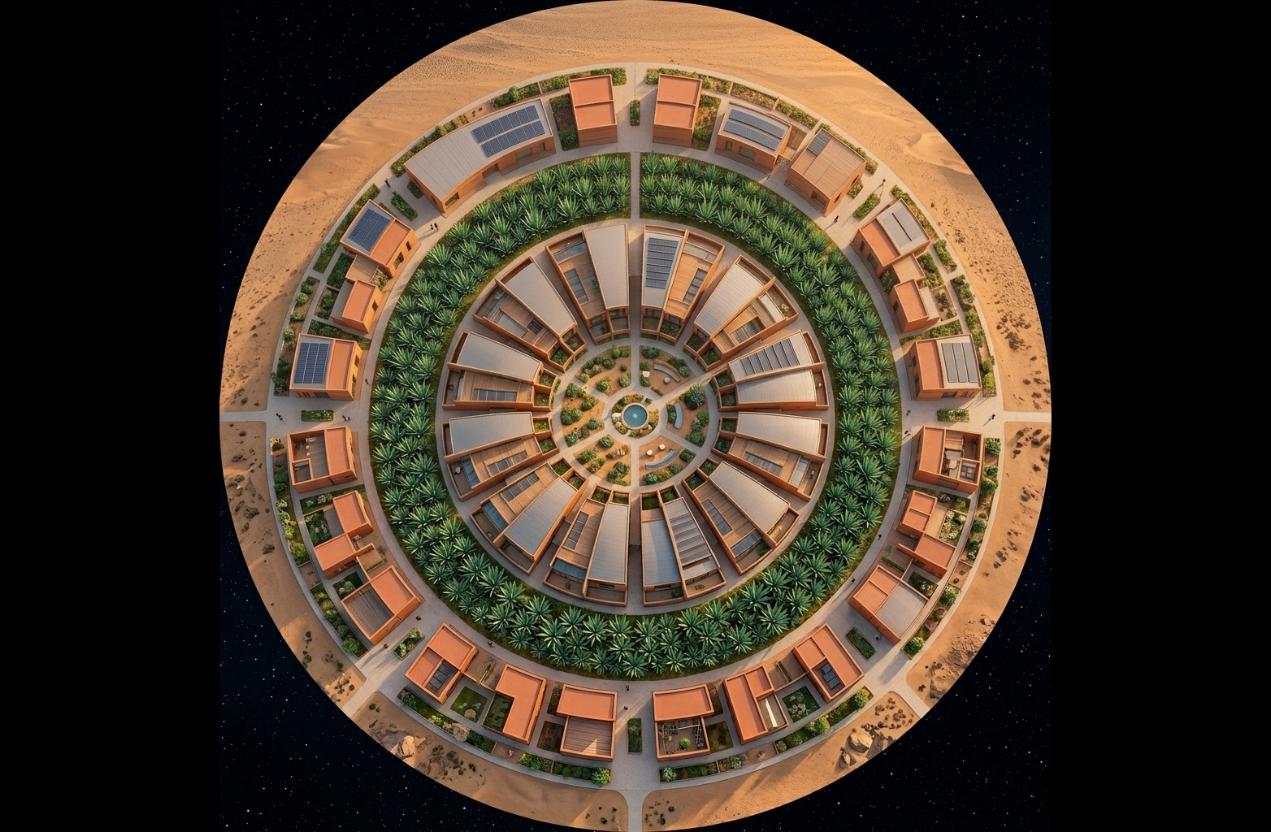
"A Turnkey Civilization Blueprint for Continental Restoration."
This 236-page technical dossier provides the mathematical and logistical framework for a self-sustaining "Gear Loop." By integrating legacy ocean plastics, volcanic pozzolans, and CAM-feedstock (Agave), this plan offers a zero-waste system for high-durability housing and rapid soil regeneration.
The Architect’s Gift:
Principal Architect Sarah Jo Cooper has waived the traditional $30M–$100M professional fee for this design. This PDF purchase supports ongoing independent research and the "Small Stones" activation fund.
What You Are Purchasing:
This is an Educational License (Tier 1). It grants the right to study, research, and distribute the logic for academic purposes.
Implementation Rights: Reserved for the Lead Global Implementer ($1B Activation).
Community Use: Small-scale local pilots are encouraged with attribution.
The Loop Logic:
Input: Landfill/Ocean Plastics + Volcanic Ash + Agave Bagasse.
Output: Self-healing, carbon-negative housing + nutrient-dense soil recovery.
The Goal: A 100% success rate for reforestation and dignified shelter.
GEO-LOOP
The Integrated Continental Renewal Blueprint
The Complete Blueprint
Whether you are a STEM student or a Global Implementer, this document contains the entire operational strategy. No separate "Billion Dollar" file exists—the value is in the pattern.
This figure represents the capital required for Continental Implementation. Sarah Jo Cooper accepts no commission, no percentage, and no architect fees for the $1B activation. Her contribution is the IP; your responsibility is the funding and execution.